
Why Hard Water Shower Cleaning in Gilbert Is Different
If you live in Gilbert, you already know what hard water does to your shower. That cloudy film on your glass doors, the chalky white buildup on tile, the rough texture on grout lines, it’s not dirt. It’s mineral deposits left behind every time water evaporates. Arizona’s water supply is loaded with calcium, magnesium, and lime, and when it dries on your shower surfaces, those minerals bond to tile, grout, and natural stone.
Hard water shower cleaning in Gilbert requires more than scrubbing with a sponge and bathroom cleaner. Standard cleaners don’t dissolve mineral buildup effectively, and many homeowners find themselves fighting the same cloudy film week after week. The real issue is that mineral deposits layer over time, creating a stubborn coating that becomes harder to remove the longer it sits. In neighborhoods like Power Ranch and Val Vista Lakes, where tile and stone showers are common, this buildup becomes a recurring frustration.
Understanding what you’re dealing with is the first step. Hard water stains aren’t surface grime, they’re chemically bonded minerals. Removing them safely without damaging your tile, grout, or natural stone requires the right approach and the right products.
What Causes Mineral Buildup on Shower Tile and Grout
Every time you shower, water splashes onto tile, grout, glass, and fixtures. When that water evaporates, it leaves behind dissolved minerals. Over weeks and months, those deposits accumulate into visible white or cloudy stains. The hotter the water, the faster minerals bond to surfaces. Arizona’s consistently warm climate means water evaporates quickly, accelerating the buildup process.
Grout is especially vulnerable. Its porous texture absorbs water and minerals, which settle deep into the surface. Even sealed grout can develop mineral staining over time, especially in high-use showers. Tile surfaces, whether ceramic, porcelain, or natural stone, develop a hazy film that dulls their appearance. Travertine and marble are particularly susceptible because their natural composition reacts with acidic cleaners, making removal tricky.
You’ll notice buildup most often around showerheads, along the bottom edges of tile walls, and on grout lines where water pools. Glass doors show streaks and cloudiness that won’t wipe away with regular cleaners. If your shower feels rough to the touch or looks dull even after cleaning, mineral deposits are likely the cause.
Safe Methods for Removing Hard Water Stains from Shower Tile
Not all cleaning methods are safe for every surface. Harsh acids like muriatic acid or straight vinegar can etch natural stone, damage grout, and dull tile finishes. If you have travertine, marble, or limestone in your shower, acidic cleaners will do more harm than good. Even on ceramic tile, overuse of aggressive chemicals can weaken grout and strip protective sealers.
For light mineral buildup on ceramic or porcelain tile, a pH-neutral cleaner designed for hard water removal can work. Apply it to the affected area, let it sit for a few minutes, then scrub gently with a non-abrasive pad. Rinse thoroughly with clean water. For grout lines, a soft-bristle brush helps lift deposits without scratching the surface.
If you’re dealing with natural stone, skip the vinegar and acidic solutions entirely. Stone-safe cleaners are formulated to dissolve minerals without etching the surface. For stubborn buildup, professionals use specialized tools and pH-balanced solutions that restore clarity without damaging the material. This is especially important for travertine tile cleaning, where improper products can cause permanent damage.
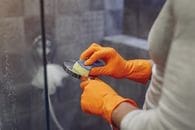
Glass shower doors respond well to non-acidic hard water removers or a paste made from baking soda and water. Apply, scrub gently, and rinse. For heavy buildup, a razor blade held at a shallow angle can carefully scrape away deposits without scratching the glass, but this requires a steady hand and patience.
When DIY Methods Stop Working
There’s a point where home cleaning methods can’t keep up. If mineral deposits have been building for months or years, they’ve likely bonded too deeply for surface-level cleaning to remove. Grout that’s discolored or rough to the touch, tile that stays cloudy no matter how much you scrub, or stone that’s lost its natural luster, these are signs that professional shower cleaning in Gilbert is the more effective option.
Why Harsh Acids Can Damage Your Shower Surfaces
When you’re frustrated with stubborn mineral buildup, it’s tempting to reach for the strongest cleaner available. But harsh acids, including undiluted vinegar, lemon juice, and commercial lime removers with high acid content, can cause irreversible damage to natural stone and grout. Travertine, marble, and limestone are calcium-based stones. When you apply an acidic cleaner, you’re essentially dissolving the surface of the stone itself. The result is etching, dull spots, and a rough texture that can’t be buffed out with a towel.
Even sealed stone isn’t immune. Acidic cleaners can break down sealers over time, leaving the stone vulnerable to staining and moisture damage. Grout is also at risk. While it may seem durable, grout is porous and can be weakened by repeated exposure to harsh chemicals. This leads to crumbling, discoloration, and the need for costly regrouting down the line.
Ceramic and porcelain tile are more acid-resistant, but the grout between them is not. If you’re using acidic cleaners on tile, you’re likely damaging the grout without realizing it. Over time, this weakens the integrity of your entire shower installation. For homeowners in Gilbert who want to protect their investment, using the right products and methods is essential.
When to Call a Professional for Hard Water Shower Cleaning
If you’ve tried multiple cleaning methods and your shower still looks cloudy, feels rough, or shows visible mineral deposits, it’s time to bring in a specialist. Professional cleaning removes buildup that DIY methods can’t touch. Technicians use pH-balanced solutions, specialized equipment, and techniques designed for each surface type. Natural stone gets treated differently than ceramic tile, and grout receives targeted attention to restore its original color and texture.
Professional cleaning also includes sealing services that protect your shower from future buildup. Sealed grout and stone repel water and minerals, making routine maintenance easier and extending the time between deep cleans. For Gilbert homeowners dealing with Arizona’s relentless hard water, sealing is one of the smartest preventive measures you can take.
You’ll also avoid the risk of accidental damage. Using the wrong product or technique on natural stone can cost thousands in repairs or replacement. A professional assessment ensures your shower gets the care it needs without the guesswork.
Keep Your Gilbert Shower Looking Its Best
Hard water is a fact of life in Arizona, but it doesn’t have to ruin your shower. Understanding what causes mineral buildup, using safe cleaning methods, and knowing when to call for help will keep your tile, grout, and stone in excellent condition. Regular maintenance and professional cleaning when needed will protect your investment and give you a shower you’re proud of.
If your Gilbert shower is showing signs of stubborn mineral buildup that won’t come clean, don’t wait until the damage gets worse. Contact AZ Tile & Stone Specialist for expert shower cleaning and restoration services that restore clarity and protect your surfaces for the long term.
Frequently Asked Questions
1. How do I remove hard water stains from my shower in Gilbert without damaging the tile?
Use a pH-neutral cleaner designed for hard water removal and scrub gently with a non-abrasive pad. Avoid acidic products like vinegar on natural stone, as they can etch the surface and cause permanent damage.
2. What’s the best way to clean hard water buildup off travertine shower walls?
Travertine requires stone-safe cleaners that dissolve minerals without etching. Never use vinegar or acidic solutions, and consider professional cleaning if buildup has been present for months, as DIY methods may not penetrate deeply enough.
3. How often should I have my shower professionally cleaned to prevent mineral buildup?
Most Gilbert homeowners benefit from professional cleaning every 12 to 18 months, depending on water hardness and shower use. Regular sealing after cleaning helps repel minerals and extends the time between deep cleanings.
4. Can I use vinegar to clean hard water stains in my shower?
Vinegar works on ceramic and porcelain tile but will damage natural stone like marble, travertine, and limestone. It can also weaken grout over time, so use it sparingly and never on stone surfaces.
5. Where can I find hard water shower cleaning near me in the East Valley?
Look for a tile and stone specialist with experience in Arizona’s hard water conditions. Professional services in Gilbert, Mesa, and Scottsdale offer safe removal methods tailored to your specific shower surfaces.
Get Professional Hard Water Shower Cleaning in Gilbert
Tired of fighting mineral buildup on your shower tile and grout? AZ Tile & Stone Specialist provides expert tile and grout cleaning in Gilbert using safe, effective methods that restore your shower’s appearance without damaging natural stone or grout. Serving Gilbert, Mesa, Scottsdale, and the East Valley, we remove stubborn hard water stains and apply protective sealers to keep your shower looking its best. Contact us today for a free estimate.
Written by Alison Claerhout, CEO of AZ Tile & Stone Specialist and professional tile and stone care expert serving the Phoenix suburbs. Learn more about Alison’s expertise.
0 Comments